
Sign up for new experiment drops

We tried to recreate an LLM ad. Here’s what we learnt.
We started with a simple question: What happens when everyone feeds the same prompts into an LLM and ends up with the same ideas?
Teaming up with an AI production crew, we began playing around with ways to show the risks. A few days later, they sent something back that made it crystal clear just how easily AI can blur creative lines. That’s when things got interesting.
Working with a real ad spot, the resemblance was… close. Closer than we expected. So we paused and dug deeper into themes like imitation, IP, and how fast things can feel off, even with the best intentions.
This experiment pulls it all together. A visual commentary on the risks and realities of using AI in creative work.
Our latest experiment is definitely our most contentious, but we also believe it’s our most important.
It started inside our own creative process. We were playing in Springboards and explored nearly 20 different ways to talk about our brand. But we kept circling the same problem: LLMs tend to give everyone the same answer. Different prompts in, similar outputs out
So we wondered, “what if we dramatised the problem instead of explaining it?”
The idea was simple: pick an ad and play with the ending to show what really happens when everyone is sent to the same place. Our original thought was to see how quickly we could conceptualise this approach but we were a little shocked at just how perfect it turned out.
We partnered with an AI production team and, on the first pass, playing with a recent OpenAI ad spot, they absolutely nailed the brief. A little too well.
The result was uncannily close to the original. In a single iteration, we ran headfirst into questions of actor likeness, copyright, and how easily generative systems drift into unsafe territory without anyone trying to cross a line.
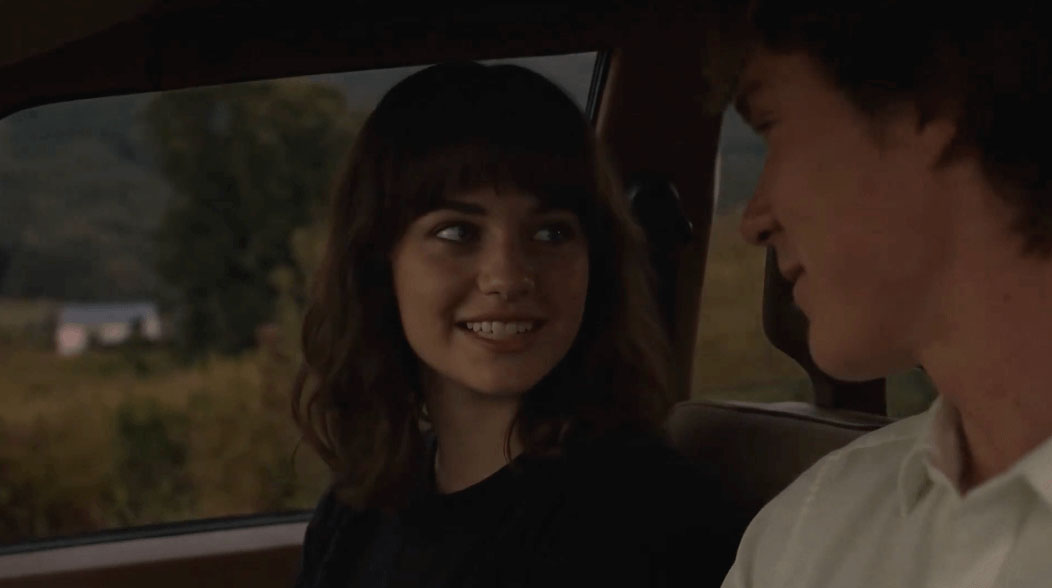
Original ad - Road Trip with ChatGPT
So we went back to editing and kept playing. It meant more time, more cost, and intentionally pulling the work away from specific voices and identities, while keeping the joke intact. The output became less perfect, but the process became more revealing.
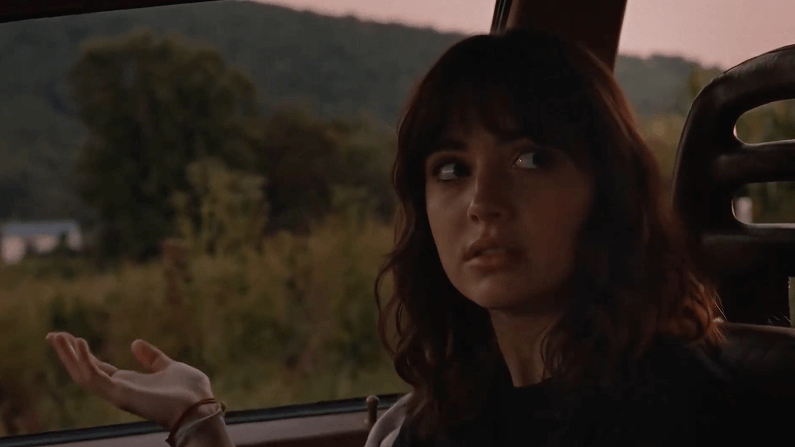
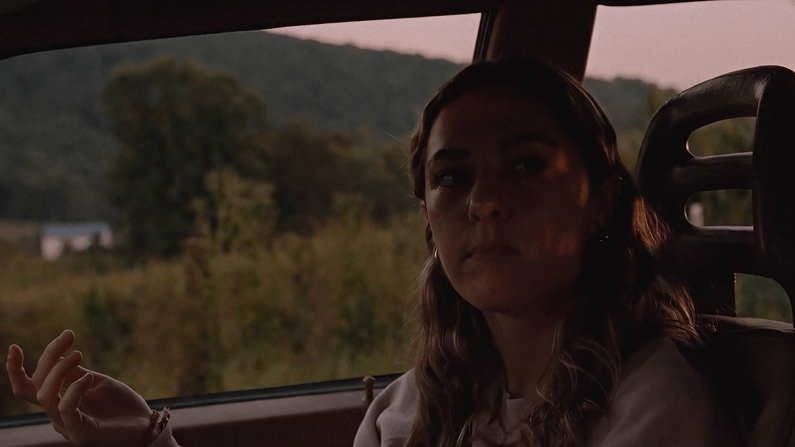


Final edit (left) vs first edit (right) - slide to see the comparison
What started as a fun way to dramatise sameness and the need for variation turned into something bigger. The experiment crystallised our fears about AI’s impact on creativity into three areas… each serious on its own, but far more troubling together.
First: a growing body of research shows that LLMs are all starting to sound the same. They are converging toward similar outputs even in open-ended settings where no single correct answer exists (see Artificial Hivemind).
%20(1).png)
Artificial Hivemind highlights convergence toward homogeneous responses in contexts with no single correct answer
Second: AI makes content generation at scale so fast and easy that it becomes too tempting to stop exercising creative judgement altogether. A shift reflected in the growing presence of AI-generated content across the web, which in many places now rivals or exceeds human-created work.
.png)
In November 2024, AI-generated articles surpassed human-written articles on the web
Third: High production values are easy to replicate at speed with limited expertise - everything ‘looks’ better but same same so work can look polished, finished, and “good enough” yet quietly losing originality and the subtle nuance only humans can really protect and detect. Judgement gets blindsided.
.png)
Experiment at storyboarding dramatising the damage caused by AI
Each of these is a problem. Combined, they’re a recipe for a world filled with work that looks decent on the surface, but feels increasingly the same underneath. Average content passed off as original creativity.
And yes, we get the irony. We get the hypocrisy of highlighting some of the dangers of AI by doing the very thing we’re raising attention to. But sometimes the only way to see the edge is to walk right up to it.
Because if we confuse creativity with fast, easy content, if we let lazy content creation overpower judgement and craft, we all end up in the same place: a more boring one.
This experiment isn’t about “look what AI can make.”
It’s about how easily creativity erodes when taste, judgment, and craft are traded for speed and ease. It doesn’t happen all at once. It creeps in through small compromises - safer choices, familiar references, repeatable templates, until everything starts to feel the same.
And finally: this experiment only became a reality because of the people behind it. A cross-functional Springboards team and production partners willing to push, question, and pull the work apart together. That process mattered as much as the output.
Because creativity doesn’t survive the age of AI by moving faster alone.
It survives by thinking together.
CREDITS
Client: Springboards
Strategy & Concept Development: Springboards inhouse team
Creative Inspiration Tool: Springboards.ai
Production & Delivery: Vinne Schifferstein, Marie-Celine Merret
AI Artist: Bob Connelly
Sound Design & VO: Jaron Ransley
MEDIA
Read the press release here.